
The Nordschleife is a one-way public toll road when it runs as Touristenfahrten, not a race track. That single fact explains most of what goes wrong on it: mixed traffic, enormous speed differences, no racing line etiquette, and no one to tell you that you are out of your depth.
This page is about where people get caught out and why. It is not a crash compilation — nothing here is anyone else’s worst day.
Start here
The circuit publishes its own explanation of how tourist sessions work. Watch that before anything else.

Tutorial: Nürburgring TOURIST RIDES – Touristenfahrten
The circuit's own tutorial on how Touristenfahrten works. Start here.

First Time? How-To Be Slow & Safe on the Nürburgring.
Being slow on purpose, from the channel that films the Nordschleife every week.
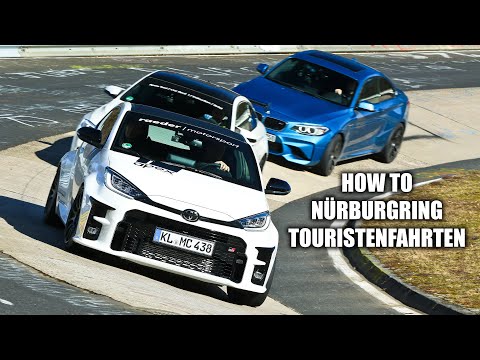
How to Nürburgring Touristenfahrten 2021: Rules, Tips & FAQ
Rules and the questions everyone asks before a first visit.
Published on those channels, embedded and credited here. The Nürburgring tutorial is the circuit’s own.
Where it goes wrong
Not the hardest corners — the ones that most reliably catch out people who are new, cold, or going faster than their information.
Adenauer Forst
A tight left-right after a fast approach. The most common first-lap mistake on the whole circuit: arriving too quickly on tyres and brakes that are still cold, then running out of road at the first apex.
Fuchsröhre
Flat-out downhill, then a heavy compression at the bottom. The car goes light over the crest and then loads hard — anything loose in the cabin ends up on the floor, and so does the suspension travel.
Bergwerk
A slow right after a fast, blind approach. Historically the most serious corner on the circuit, and still the one where a misjudged entry has the least room to be corrected.
Schwedenkreuz
Very fast and slightly blind over a crest. A commitment corner: the speed does not feel like the speed, which is exactly why it catches people.
Wehrseifen
Slow, tight and downhill into the entry. Easy to arrive with too much speed and run wide on the exit, where the road falls away.
Karussell
Banked concrete. It looks like a novelty and behaves like a load test — the car is compressed hard through it and the surface is deliberately rough.
Pflanzgarten
Jumps and compressions in sequence. Cars get airborne here, which means the moment you land is the moment you have no steering or braking authority.
Brünnchen
Downhill right then left, and the busiest spectator spot on the circuit. Exits get untidy here more often than anywhere else, and there is always an audience with a camera.
The things that actually cause it
- Cold tyres and brakes. The first kilometres of a lap are the least grip you will have all session, and they contain some of the fastest corners.
- Damp under the trees. Long sections sit in shade. The rest of the circuit can be dry while those are not.
- Speed differential. You will share the road with everything from race cars to vans. Overtaking is on the left, and slower traffic is expected to make room — but do not assume anyone has seen you.
- Twenty kilometres of memory. Nobody learns this circuit in a day. Not knowing what is over the next crest is the normal condition, not a failure.
Noise limits, circuit by circuit
The most common reason a car is turned away at the gate. What catches people out is not the number — every circuit measures something different, so the figures cannot be compared with each other.
These figures are not comparable with each other. A drive-by limit, a sound-power figure, a whole-day average and an environmental limit at the fence are four different measurements. Every one changes by event, so confirm with your organiser.